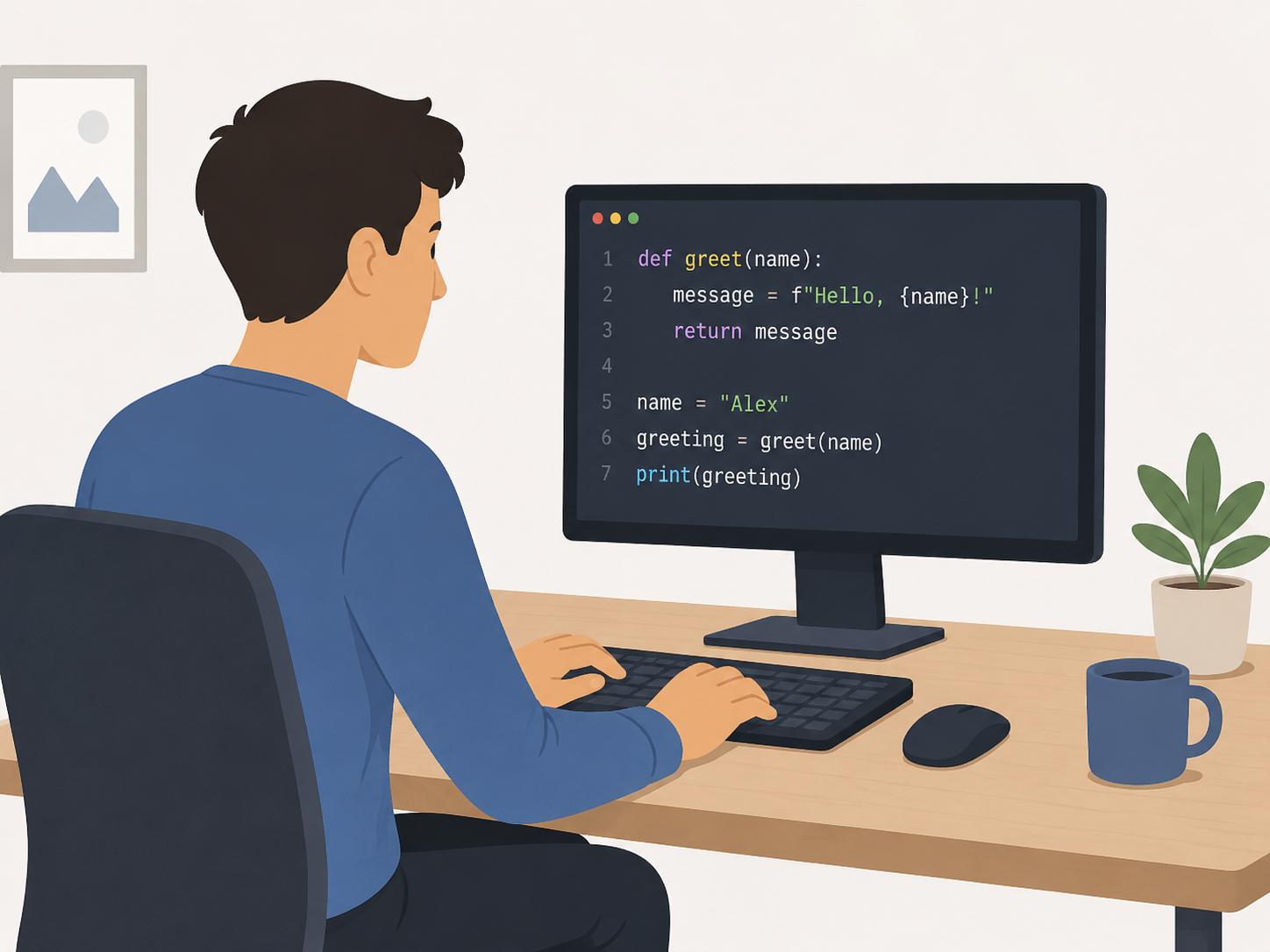
Coding Is Not That Scary
Learning code can look scary at first. You open your laptop, see strange symbols, red errors, brackets, and random words that look like a secret alien language.
But relax. Let’s break coding down and see why it’s not as scary as it seems.
Coding is basically teaching a computer what to do. The funny part is that computers are powerful, but also extremely dramatic. You forget one small comma, and the computer acts like the whole universe just crashed.
Think of Code Like Talking to a Robot
Imagine the computer as a very smart robot with zero common sense.
You tell it exactly what to do.
If your instructions are clear, it works. If not, the computer either breaks, gives errors, or does something unexpected.
If your instructions are confusing, it either breaks, gives you an error, or does something completely cursed.
That’s why coding is funny and rewarding. You’re not just learning a skill—you’re discovering how to communicate with the most literal machine ever, making each step a blend of challenge and play.
Start With Tiny Fun Projects
Do not try to build the next Facebook on day one.
That is how beginners get cooked.
Start with small projects that make you smile. Build a button that changes color. Create a random joke generator. Make a calculator that gives funny messages. Build a quiz about your favorite game, anime, movie, or football team.
Small projects are perfect because they teach you real skills without making your brain explode.
Errors Are Just Boss Fights
Every beginner hates errors.
But honestly, errors are part of the game.
At first, an error message feels like the computer is insulting you. Later, you realize it is just giving you clues. Every bug is like a mini boss fight. Some bugs are easy. Some bugs are annoying. Some bugs make you stare at the screen like you are trying to decode ancient magic.
But when you fix one, the feeling is beautiful.
You go from confused human to digital wizard in three seconds.
Make Coding Personal
The best way to enjoy coding is to connect it to things you already like.
If you like games, build a tiny game.
If you like cybersecurity, create a password checker.
If you like football, build a score tracker.
If you like tech, make a simple landing page.
If you like memes, build a meme generator.
Coding is much more fun when your projects mean something to you.
Be Bad at First
Your first code will probably look messy.
Your layout might look cursed.
Your button might appear in the wrong place.
Your app might work once, break twice, then work again at random, like it has mood swings.
That is normal.
Nobody starts clean. Every good developer begins by writing confusing code and asking, “Why is this not working?”
Being bad at first is not failure. It is literally part of the process.
Use Silly Challenges
One fun way to learn faster is to create silly challenges.
Build a serious-looking website with one ridiculous hidden button.
Create a to-do list that celebrates when you finish a task.
Make a chatbot that replies like it needs coffee.
Create a random quote generator that sounds way too dramatic.
These funny little projects keep your brain interested while secretly teaching you real programming logic.
Talk to Your Code
This sounds weird, but it works.
Explain your code out loud.
Say what each line is supposed to do.
When you explain it, your brain starts noticing mistakes faster. Developers even have something called rubber duck debugging, where they explain their code to a rubber duck.
Yes, talking to a duck can be part of programming.
That is how you know coding is a special kind of chaos.
Learn a Little Every Day
You do not need to study twelve hours a day.
Even 30 minutes a day can make a big difference if you stay consistent.
Coding is like going to the gym for your brain. You improve by showing up again and again.
Some days you will feel smart.
Some days, you will feel like the keyboard is personally attacking you.
Both days count.
The First Victory Feels Amazing
One day, your button will work.
Your page will look nice.
Your function will finally return the right result.
Your bug will disappear.
And you will sit there like, “Wait, I actually built this.”
That small moment is powerful. It motivates you to keep learning and proves that coding is not impossible—it just requires consistent, playful practice and patience.
Final Thoughts
Learning code is best when it’s fun, personal, and meaningful.
Keep coding enjoyable: laugh at errors, build weird projects, and embrace the fun in every learning step.
Coding is not about being a genius from day one.
It’s about staying curious, learning from mistakes, and embracing coding’s playful and creative chaos.
Leave a Reply